
Fener, Balat and Kariye: Reading Istanbul in Layers
Plan a thoughtful route from the Golden Horn to Kariye Mosque, with attention to living neighbourhoods, Byzantine art and the practical questions worth asking before a visit.
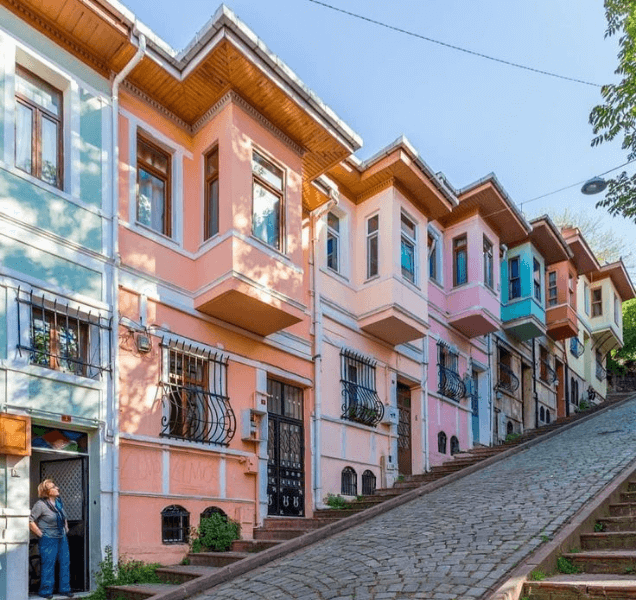
Beyond a colourful-street itinerary
Fener, Balat and Kariye are easy to put on the same day’s map, but treating them as one picturesque backdrop misses what makes the route worthwhile. The two neighbourhoods near the Golden Horn hold traces of communities that lived, worshipped and traded here. Kariye is a different kind of stop, a monument nearer the land walls. Türkiye’s Ministry of Culture and Tourism describes Fener and Balat through wooden houses, churches and synagogues. UNESCO places the former Chora church within the wider Historic Areas of Istanbul, rather than reducing all this heritage to a single street. Begin with a question instead of a checklist: what can a building reveal, and what remains part of everyday life? That change of focus gives the walk a more respectful rhythm.
Recognise living institutions in Fener
The Greek Orthodox Patriarchate in Fener makes clear that the neighbourhood is more than a preserved historical image. Istanbul’s provincial tourism directorate lists its St George church among the city’s active religious places. For visitors, that means current use matters as much as the past. Do not assume every area is open simply because a guidebook names it. Check the institution’s visitor guidance, respect worship and follow any instructions about photography. A facade cannot stand in for the entire history of a community. Signs, courtyards and routes back to the waterfront all reveal that Fener remains a lived-in district. If you travel with a guide, ask them to explain both the building’s history and the way the place is used today.
See several histories in Balat
Balat’s synagogues, churches and homes point to different strands of Istanbul’s social history. A publication by the Ministry explains that a substantial part of the city’s Jewish population lived in Balat and nearby quarters during the Ottoman period. That broad fact does not make every street belong to one identity or one century. Verify whether a particular religious building is open, requires advance permission or has an active worship schedule before planning an interior visit. Be thoughtful when photographing doorways, windows and residents. Painted facades are an appealing starting point, but turning Balat into a row of colourful backdrops erases the people who have made it a neighbourhood. Pause to compare how different buildings share the same slope rather than rushing to the next camera angle.
Name Kariye accurately
An older travel page may call Kariye a museum. Today Kariye Mosque is the more accurate name to use, while admission arrangements and access should always be checked against current official information. UNESCO describes the former Church of the Holy Saviour in Chora and its mosaics and paintings as part of Istanbul’s historic heritage. That explains its importance for Byzantine art without replacing the building’s present function with a former label. Before entering, look for the areas available to visitors, guidance for a place of worship and rules for photography. Conservation and worship can create different practical needs within one building. A good guide can help you distinguish its periods and uses without pretending that this history is simple or static.
Read images within their space
At Kariye, do not search only for the most vivid image. First notice how the entrance, ceiling and adjoining spaces connect; then consider how a scene relates to others around it. UNESCO places the mosaics and paintings of Chora in the fourteenth and fifteenth centuries. That date range does not mean every surface was made at exactly the same moment or for exactly the same purpose. When a painted area is missing, avoid inventing a confident story about what was once there. Follow on-site boundaries, photography rules and any restriction on flash. These measures can feel limiting, yet they protect surfaces that other visitors also need to see. Looking from the permitted distance can still reveal composition, colour and the relationship between architecture and image.
Connect the route to the land walls
A map helps place Kariye in relation to Istanbul’s land walls. UNESCO identifies the area along both sides of the Theodosian walls as one component of the World Heritage property. Moving from Fener and Balat toward Kariye takes you from waterfront neighbourhoods to another topography. Estimating the journey by straight-line distance alone may produce a tiring day. You do not need to fit the entire wall circuit into this outing; a well-chosen section is enough to understand how the peninsula was shaped and defended. Traffic, steps and access to specific spaces may change. Ask which stretch the tour actually visits and which transitions use a vehicle. A realistic route leaves more time to see rather than simply arrive.
Use the CREAOS programme as a conversation
The CREAOS journey titled “Istanbul City Walls, Fener&Balat Tour and Chora” brings Kariye Mosque, the walls and the neighbourhoods into one proposed route. Its headings describe the idea, but the exact order, access to interiors and time spent at each place should be agreed before booking. If Byzantine art is your main interest, ask for more time at Kariye. If neighbourhood history matters most, give the guided walk and rest stops more room. Check current access, admissions and photography permissions with the responsible institutions near your travel date. Your starting point, group size and walking needs can alter the pace. A private journey is useful because it can answer those real questions, not because it promises to rush through every stop.
Take away three different impressions
At the end of the day, try to retain three distinct impressions: the Golden Horn’s position, the living institutions of Fener and Balat, and the painted surfaces protected at Kariye. Do not compress them into a generic idea of “old Istanbul.” Ministry and UNESCO sources provide historical context; current visitor decisions require the latest guidance from the relevant institution. Recheck access closer to departure, since worship, maintenance and weather may affect what you can see. Passing through a residential street with consideration and viewing artwork from a safe distance do not diminish the experience. They make it more honest. Separate what you have observed from what a source confirms, and keep a question open where evidence is incomplete.