
Göbeklitepe and Şanlıurfa: Reading the Site in Its Wider Setting
A measured way to see Göbeklitepe’s T-shaped pillars, Şanlıurfa Archaeology Museum and the living city around Balıklıgöl.
More than a familiar photograph
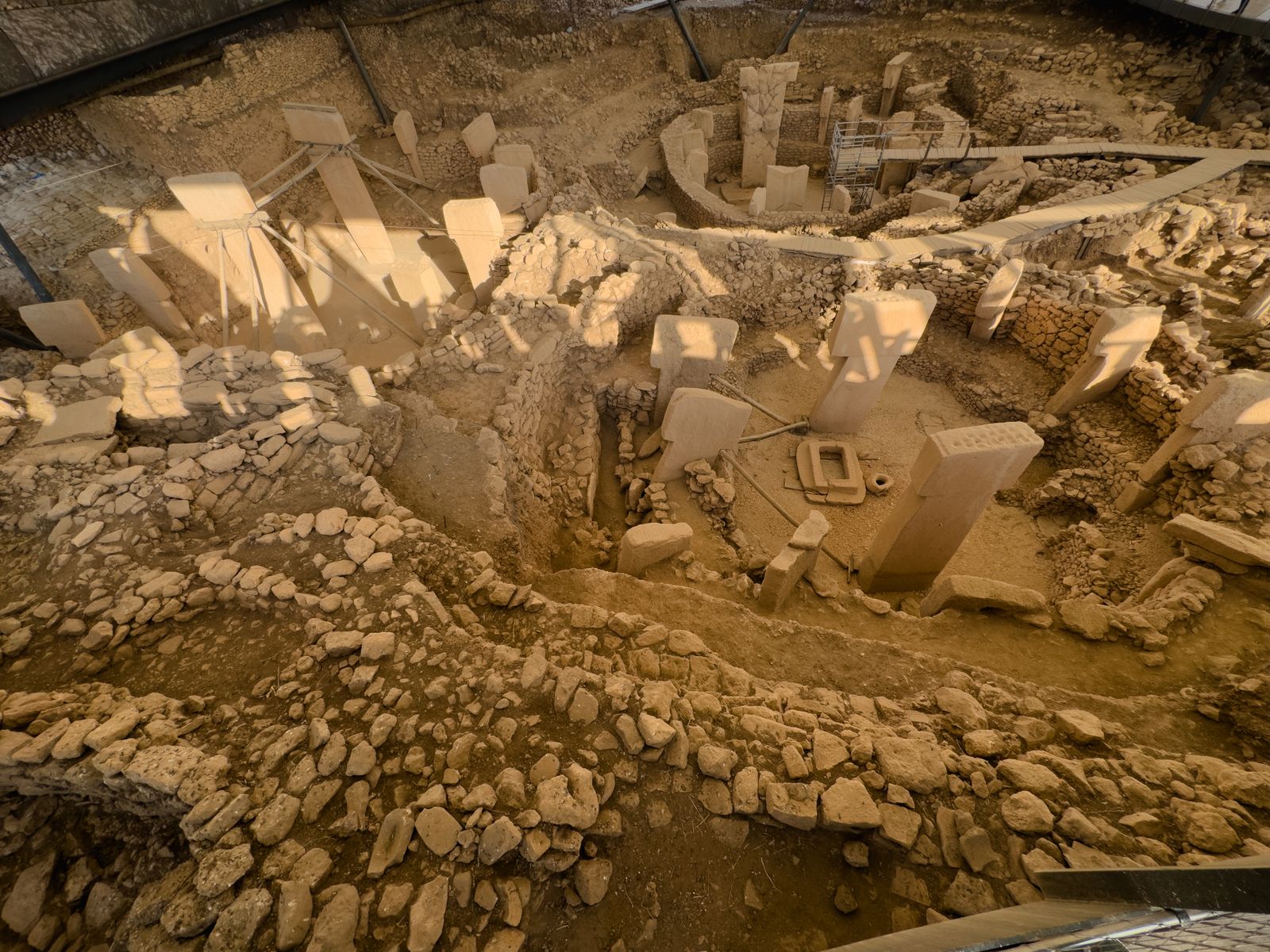
The T-shaped stones of Göbeklitepe are recognisable in an instant. Yet a journey to Şanlıurfa arranged around a single photograph can leave the most interesting questions untouched. Who raised the pillars together? How did the buildings function, and how did the people who used them relate to neighbouring communities? Not every question has a settled answer. A rewarding visit allows evidence and uncertainty to stand side by side instead of forcing the site into a ready-made legend. The Archaeology Museum helps establish a chronology; the excavation gives that chronology physical scale; the city centre introduces a different, living history. Together they make a thoughtful itinerary, provided we do not collapse thousands of years into one continuous story.
Start with the chronology
UNESCO dates Göbeklitepe’s monumental round-oval and rectangular structures to the Pre-Pottery Neolithic, broadly between 9600 and 8200 BCE. The site joined the World Heritage List in 2018. These dates describe a long sequence of building and use, not a single construction event. It would be misleading to imagine that every visible stone was set in one season or by one generation. The region matters to the study of changing lifeways between hunting and gathering and the emergence of early farming communities. That does not mean one excavation alone can explain the whole transition. Allow time for the museum’s Neolithic galleries before or after your site visit. They help place an extraordinary monument within a wider and much longer human story.
Look at the arrangement of the stones
At first the tall limestone pillars attract attention. Then the architecture begins to emerge: in several enclosures, surrounding stones face a larger central pair, with walls connecting the elements. UNESCO notes carvings of wild animals and details such as belts and loincloths on pillars interpreted as abstract human forms. Try to see the pattern before looking for a single dramatic motif. The relationship between sculpture, construction and communal space is as important as the individual animal figures. Be wary of explanations that assign a certain religious meaning to every carving. Archaeology can document placement, workmanship and repeated imagery, but it cannot directly recover every thought of the makers. A knowledgeable guide can point out what is observed and where interpretation begins.
Treat the “first temple” label carefully
Göbeklitepe is frequently introduced as the world’s first temple. The phrase attracts attention, but it can make continuing research sound complete. UNESCO associates the monumental buildings with social events and probable rituals. It also records more modest remains that may relate to domestic activity. Presenting the whole complex as a single-purpose sanctuary with a fully understood belief system is therefore too neat. What a visitor sees is a protected portion of an archaeological landscape under study, rather than a finished picture of all its past uses. New discoveries can change interpretations. Ask not only what the evidence supports, but also what remains untested. That makes the site no less remarkable; it makes its achievement more interesting.
Read the landscape around the excavation
The experience extends beyond the sheltered excavation. The limestone plateau, nearby elevations and views toward the Şanlıurfa plain help visitors think about the setting in which stone was worked and buildings were made. Pause along the visitor route to look outward before concentrating on the enclosures. The scale missing from many close-up photographs becomes clearer: material, labour and gathering all had physical dimensions. Today’s roof, paths and information panels are modern layers that make a sensitive site accessible. They should not be mistaken for an exact reconstruction of ancient circulation. Stay on the marked route, both to protect archaeological remains and to leave room for a slower reading of the place. A landscape view is context, not a licence to invent what every horizon meant to its builders.
Use the museum to widen the frame
Şanlıurfa Archaeology Museum is a strong companion to the site. Its official description brings together Göbeklitepe finds, material from Nevali Çori and other evidence for the region’s Neolithic past. Follow the sequence from tools and smaller objects toward monumental work rather than rushing to one famous display. The life-sized figure often called Balıklıgöl Man is also housed here; it should not be described as an object excavated at Göbeklitepe. Labels, findspots and periods matter because discoveries in the same province do not automatically belong to the same community or date. The museum supplies connections that are difficult to see in the open air, while the site gives excavated architecture a scale that display cases cannot reproduce. Neither visit substitutes for the other.
Meet a different Şanlıurfa at Balıklıgöl
After the museum, a walk around Balıklıgöl changes the pace and the historical register. Halilürrahman Lake, surrounding religious buildings, courtyards and the everyday activity of the centre belong to Şanlıurfa’s living cultural landscape. Accounts associated with Abraham should be heard as local religious tradition, not offered as archaeological proof about Neolithic Göbeklitepe. The distinction respects both subjects. Walk gently around worshippers and other visitors, and allow the area to be more than a quick stop between ancient sites. The city is not merely a gateway to a distant excavation. It has its own layered public spaces and practices. In a single day you can encounter prehistoric architecture and a contemporary sacred place without pretending they are chapters of one unbroken narrative.
Plan a day with room to think
A day can include Göbeklitepe and central Şanlıurfa, but it needs breathing space. Starting at the museum builds a timeline before you see the pillars; starting at the site lets curiosity lead and the galleries answer later questions. Both orders work. Travel time, season, weather and the group’s pace should decide the sequence. Do not reduce the protected excavation to a photo stop. Allow time to read panels, notice the enclosures and look across the plateau. Museum opening arrangements and admission conditions can change, so check official museum pages when setting your date. A fixed promise that every visitor can cover all stops in exactly the same number of hours would be less useful than a flexible plan shaped around real interests.
Leave with a better question
On the way out of Göbeklitepe, carry another question alongside “What is the oldest thing here?” Ask what people could accomplish together in this landscape. Monumental architecture makes shared labour, skilled stonework and gathering visible. The museum expands the picture with objects and chronology; the streets of Şanlıurfa add the present. Keeping these views distinct makes the journey more honest as well as more memorable. We do not know everything the pillars meant to their makers, but we can learn how researchers reach and revise conclusions. That is a better souvenir than one sensational sentence: more precise observations, more open questions and a clearer sense of the region around the site.