
İznik Beyond the Council: Walls, Tiles and a Lakeside City
Read İznik through its gates, the two councils, the Green Mosque, ceramic craft and the lake that shaped the city.
A city best understood on foot
İznik is often introduced through the First Council of Nicaea. That meeting matters, but a visit becomes more rewarding when you notice the town around the famous date. Streets lead between surviving gates, a former church, an early Ottoman mosque, tile workshops and the shore of Lake İznik. These are not pieces of one single age. They show how the same urban ground was used and reinterpreted over centuries. A good day here is not a race between monuments. Start by finding the old street pattern, give individual buildings time and finish beside the water. The route turns an abstract history into a walk through a living town.
Begin at the walls and gates
The walls make İznik legible before you reach any museum label. They encircle the old town, while named gates such as İstanbul, Lefke and Yenişehir still anchor directions. Look closely at the masonry instead of imagining that every stretch belongs to one Roman building campaign. Repairs and additions speak to a place that remained important through successive periods. Stand near a gate and ask what it controlled: entry to a settlement, traffic along a road and movement between town and countryside. From there, follow one of the streets toward the centre. The arrangement of gates and crossing routes helps explain why the central square remains a practical starting point today.
Two councils, different places
The First Council of Nicaea met in 325. Türkiye’s Ministry of Culture and Tourism associates that gathering with the Senatus Palace, rather than the present İznik Hagia Sophia. The Seventh Ecumenical Council met in 787 at Hagia Sophia, which later became the Orhan Mosque. Keeping the two settings distinct protects the story from a common shortcut. The first council addressed major questions of Christian doctrine and church practice; the later council is associated with the restoration of the veneration of icons. You do not need to settle every theological debate during a short visit. It is enough to understand why Nicaea appears in the history of Christian communities far beyond the town.
At İznik Hagia Sophia
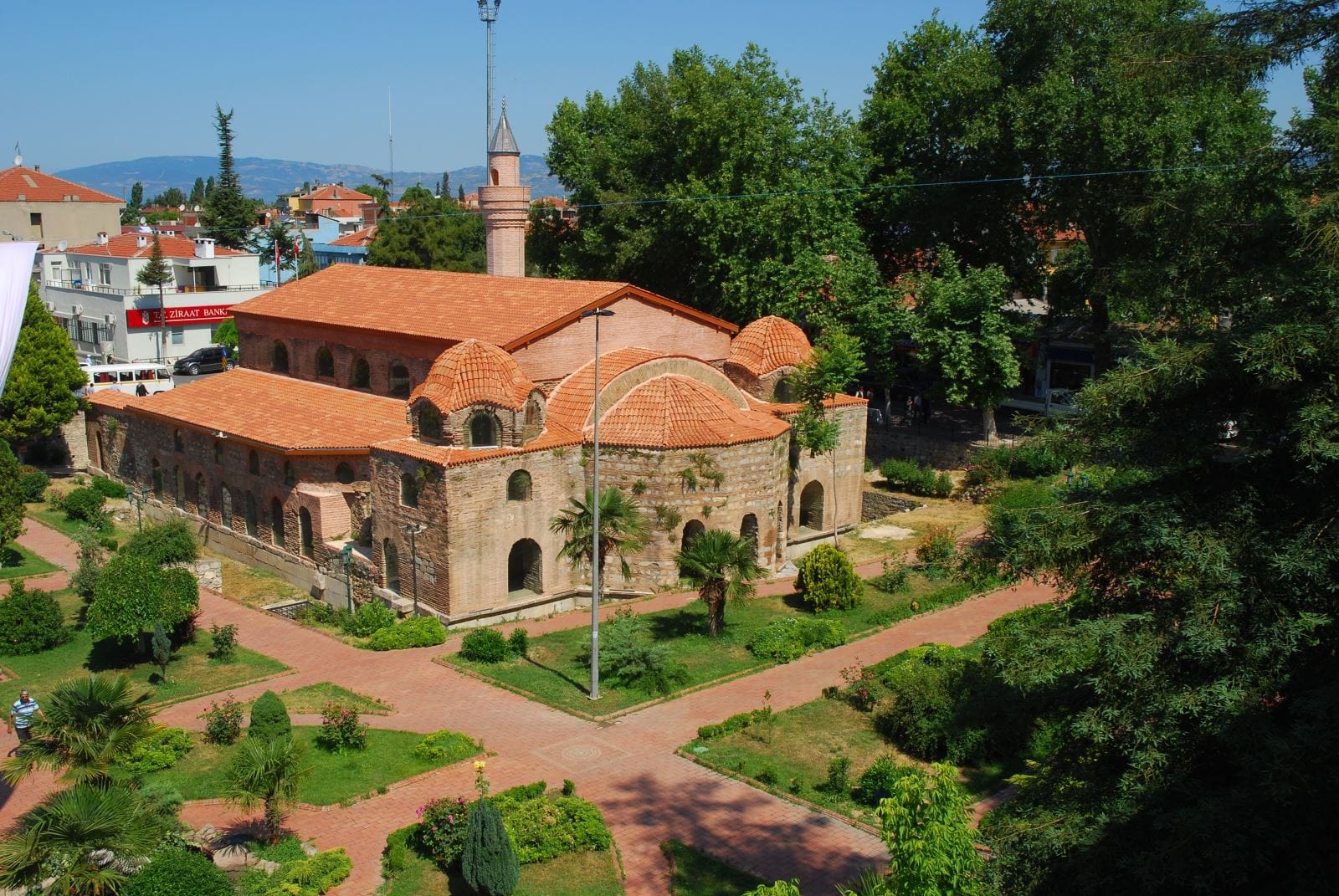
At the crossing of the main streets, İznik Hagia Sophia rewards slow looking. Official cultural heritage descriptions trace more than one building phase at the site, including reconstruction after damage and its conversion to a mosque after the Ottoman conquest of 1331. That history is more informative than calling the building simply Byzantine or Ottoman. Notice how architectural elements from different periods meet in the same space. It is also worth remembering that the name Hagia Sophia does not refer only to the famous monument in İstanbul. Here it identifies a separate İznik building associated specifically with the council of 787. Respect the site’s current function and any visitor guidance in force on the day.
The Green Mosque and early Ottoman İznik
Yeşil Cami, the Green Mosque, gives the walk another change of scale. Its decorated minaret is the feature to look for first: blue and green ceramic elements make the exterior a lesson in colour and pattern. The Ministry of Culture and Tourism identifies it as an early Ottoman monument linked to the Çandarlı family. Rather than treating the mosque as a side stop after the councils, consider what it says about İznik following the Ottoman capture of the town. Religious architecture, craft and urban life continued to change together. The building also prepares your eye for the broader ceramic story that made the name İznik familiar in collections well beyond Türkiye.
Why İznik tiles matter
The best way to understand an İznik tile is to look past the souvenir shelf. Designs, glazes and colours came from skilled labour and a demanding sequence of forming, painting and firing. Ministry sources describe the rise of İznik ceramics and their importance to Ottoman artistic life, especially in the fifteenth to seventeenth centuries. A workshop visit can make that process tangible, provided the maker is actually demonstrating it on your travel day. Ask what is handmade, what is newly made using historic motifs and what belongs to a museum collection. These are different experiences. Shopping can be enjoyable, but it should follow curiosity about the craft rather than replace it.
End by Lake İznik
The lake is more than a pleasant backdrop for photographs. UNESCO’s description of İznik’s historic landscape stresses the relationship among town, water and agricultural land. Walking to the shore after the central monuments helps restore that wider scale. From there, you can consider why settlement, cultivation and routes converged here. You may also hear about archaeological remains discovered near the lakeshore, but a short visit should not promise an underwater view or an accessible excavation. Conditions, research and viewing opportunities change. A simple lakeside pause is valuable in its own right: it gives the dense stone and ceramic details of the morning room to settle.
A sensible order for one day
For a first visit, start with a gate and a short section of walls, continue toward İznik Hagia Sophia, then turn to Yeşil Cami and the museum. Leave space for a genuine ceramics stop rather than assuming every shop is a working studio. Finish at the lake when the busiest part of the walk is behind you. This is a suggested reading order, not a claim that every venue will always be open. Check current access, prayer times where relevant, museum hours and any mobility needs shortly before travel. The old town is compact enough for a thoughtful sequence, yet uneven surfaces and summer heat can affect the pace.
Leave with a clearer map
By the end of the day, the town’s layers should feel less like a list of unrelated attractions. The gates outline the city; the councils explain why Nicaea became a name in religious history; Hagia Sophia and Yeşil Cami show changing uses of sacred space; the ceramics reveal specialised work; the lake returns the whole story to its landscape. Keep the First Council of 325 separate from the Seventh Council of 787, and keep both within the longer life of İznik. That small act of precision makes the visit more interesting. The best souvenir may be a map in your mind of how streets, buildings, craft and water still belong together.