
Love and Devrent Valleys: Two Ways to See Cappadocia
Look beyond a checklist of fairy chimneys: Love Valley and Devrent reward different attention to rock shapes, light and walking pace.
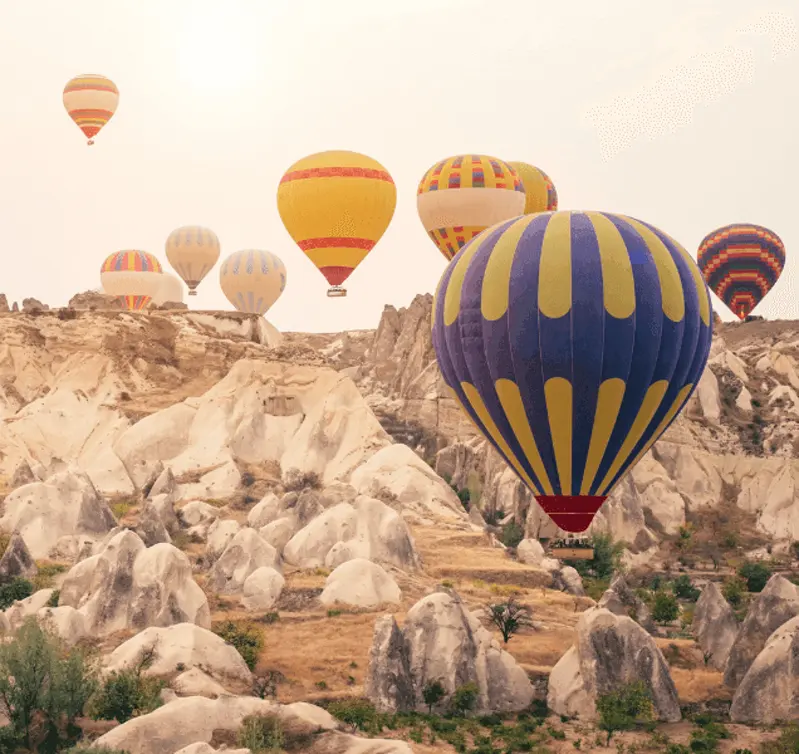
Two stops, two ways of looking
It is easy to collect Cappadocia viewpoints and harder to remember how each differed. Love Valley and Devrent make a useful pair. Both show rock shaped by erosion, but ask for different attention. At Love Valley, tall pillars invite a walk among forms. At Devrent, visitors often recognise animals or familiar shapes in rocks. Türkiye's official tourism guidance describes both valleys. This guide asks what you can learn by slowing down, comparing shapes and light, and respecting a fragile landscape.
The landscape is still changing
UNESCO describes the Göreme area as a volcanic landscape sculpted by erosion into ridges, valleys and fairy chimneys. GoTürkiye explains that rain and wind worked on softer volcanic layers over a very long period. Those broad facts do not let us date every pillar we see from a photograph or assume every surface has the same composition. A harder cap above a softer body can help explain some striking silhouettes, yet the local details vary. Imagine the formations not as permanent stage scenery but as the current appearance of a changing landform. This perspective makes tiny cracks, exposed surfaces and loose ground worth noticing. It also gives a reason to stay on established routes: the material beneath your feet and the edges of the path are part of the place you came to see.
Give Love Valley some time
GoTürkiye's walking guidance mentions a trail through Love Valley's fairy chimneys and a viewpoint around Aşıklar Tepesi. Before heading to the best-known photo spot, stop and judge the scale of the valley. From nearby, the distance between columns may feel different from the compressed pattern in a distant photograph. Looking at one group of rocks from several safe points reveals lines that a single angle hides. Walking length and starting point depend on your chosen route, so follow current signs and local guidance rather than treating an old online map as a promise. Think about the walking ability of everyone travelling with you. A short, attentive walk may teach you more than several rushed stops made only to add pictures to a collection.
Light is not a guarantee
Sunrise and sunset images make Love Valley instantly recognisable. Side light can emphasise the columns and the spaces between them, but cloud, visibility and weather change from day to day. Balloon flights depend on conditions as well; never build a valley visit around a promised balloon photograph. An overcast morning may reveal surface texture, while an open afternoon can throw longer shadows across the rock. If photography matters to you, ask in advance how much time the tour will spend at the stop. Check that the ground is stable and access permitted before positioning a camera. An extra metre toward an exposed edge is not worth a cleaner frame. The image you bring home should reflect the place as it was on your day, not an expectation borrowed from somebody else's perfect weather.
Let Devrent invite imagination
Official tourism material introduces Devrent through smaller rock formations that suggest animals and a moonlike landscape. The camel-shaped formation is a familiar example. Such comparisons are interpretations made by viewers, not archaeological labels or names assigned by nature. Before taking a photograph, ask someone else what they see in the same rocks. Change your angle and notice whether the imagined animal remains convincing. This simple exercise keeps observation active without pretending the valley hides a fixed set of sculptures to tick off. There is no need to step beyond a safe viewing area to find one particular outline. Keeping to permitted routes protects the rock surface and the smaller plants around it. Devrent is most rewarding when playfulness is matched by care.
Compare without ranking
In Love Valley, attention often settles on tall isolated pillars and the urge to move between them. At Devrent, it may settle on a cluster of smaller shapes and the stories viewers attach to them. These are questions for observation, not rigid definitions of each valley. Instead of asking which is more beautiful, ask what detail each place helped you notice. An open view, the rhythm of rocks and the direction of light produce different photographs. But do not label every generic Cappadocian image with a precise valley name. Many formations resemble one another, and a cover photograph may depict a different part of the region. If you cannot identify its location, a truthful Cappadocia caption is better than a confident but wrong one.
Care for a vulnerable setting
UNESCO notes that erosion and intensive tourism put pressure on the wider Göreme and Cappadocia rock landscape. That statement should not be used to claim that every part of Love or Devrent has an individual UNESCO designation. It should inform how we behave in the region. Making a new line on a soft slope, crowding a narrow edge or touching a fragile formation can seem minor until many visitors repeat it. Follow marked paths and local warnings, and check current rules separately for activities such as drones or commercial filming. A picture with no people in the frame does not prove the area is untouched. Conservation begins before the shutter clicks, when we decide where to stand and how to share a small viewpoint with other visitors.
Keep the tour day realistic
The CREAOS Cappadocia Green Tour description names Love Valley and Devrent alongside Zelve, Paşabağı, Uçhisar and the Three Beauties. A list of stops does not guarantee equal time at all of them. If a valley walk is your priority, ask before booking where the group will leave the vehicle and how long the stop is expected to last. The Turkish and English itinerary descriptions differ, so confirm the route applicable to your travel date with the team. Museum entry arrangements can also change. Prepare shoes, water and sun protection for the season; rock and soil paths are not uniformly level. A short guided viewpoint visit and a long independent hike are different experiences. A sensible day allows for movement between stops, not just time at them.
What remains after the photographs
You need not return with two interchangeable pictures of fairy chimneys. Remember the space between pillars that looked close together from afar at Love Valley, or how two companions found different animals in one Devrent formation. These details make geology engaging without reducing the landscape to entertainment. Check current access and weather information before leaving. On site, set a walking pace everyone can manage and treat marked boundaries as part of the visit. Understanding Cappadocia begins with asking why a particular shape catches your attention and what changed when you looked again. Love and Devrent offer different answers to that question, even on a day when the light refuses to match a postcard.