
Trabzon and Sümela: From the Coastal City to the Mountain Monastery
A considered route from Trabzon’s layered architecture to Sümela Monastery in the forests and cliffs of Altındere Valley.
Two settings, two ways of looking
Trabzon and Sümela deserve more than two stops on a photo trail. Trabzon is a working Black Sea city whose buildings record changing uses. Sümela stands on a cliff in Altındere Valley, where architecture, forest and terrain are inseparable. The journey between them changes the questions worth asking. In town, consider how a building has been used across centuries. In the valley, notice how a community fitted rooms, water and worship into a difficult site. CREAOS places Trabzon on the first day of its Eastern Black Sea tour and Sümela on the third. That separation gives each place a suitable pace.
Read Trabzon in layers
Buildings begun as churches, later adapted as mosques, Ottoman works and more recent residences contribute to Trabzon’s memory. The provincial Culture and Tourism Directorate explains that Trabzon Hagia Sophia became a mosque after the Ottoman conquest and served as a museum for a later period. Its present use should not erase either earlier chapter. The official history describes biblical frescoes, exterior stone reliefs and a patterned marble floor beneath the dome. These are different forms of evidence. Ask what each detail says about the building’s use rather than collecting a façade photograph. As this is an active place of worship, check current access and conduct guidance before assuming that every interior area can be visited.
One detail at Hagia Sophia
A slower look at Trabzon Hagia Sophia can begin with one surface. The provincial directorate identifies animal and plant forms outside, religious scenes inside and multicoloured marble work on the floor. Find a carving and notice which side of the building it faces. Then think about where a viewer would have stood to see a fresco. Conservation work or worship may affect what visitors can see. Follow local instructions, avoid touching decorated surfaces and give worshippers their space. A walk around the site can also prompt a question about the city’s relationship with the sea. The surroundings have changed, while the building keeps evidence of earlier coastal life.
From the city into Altındere Valley
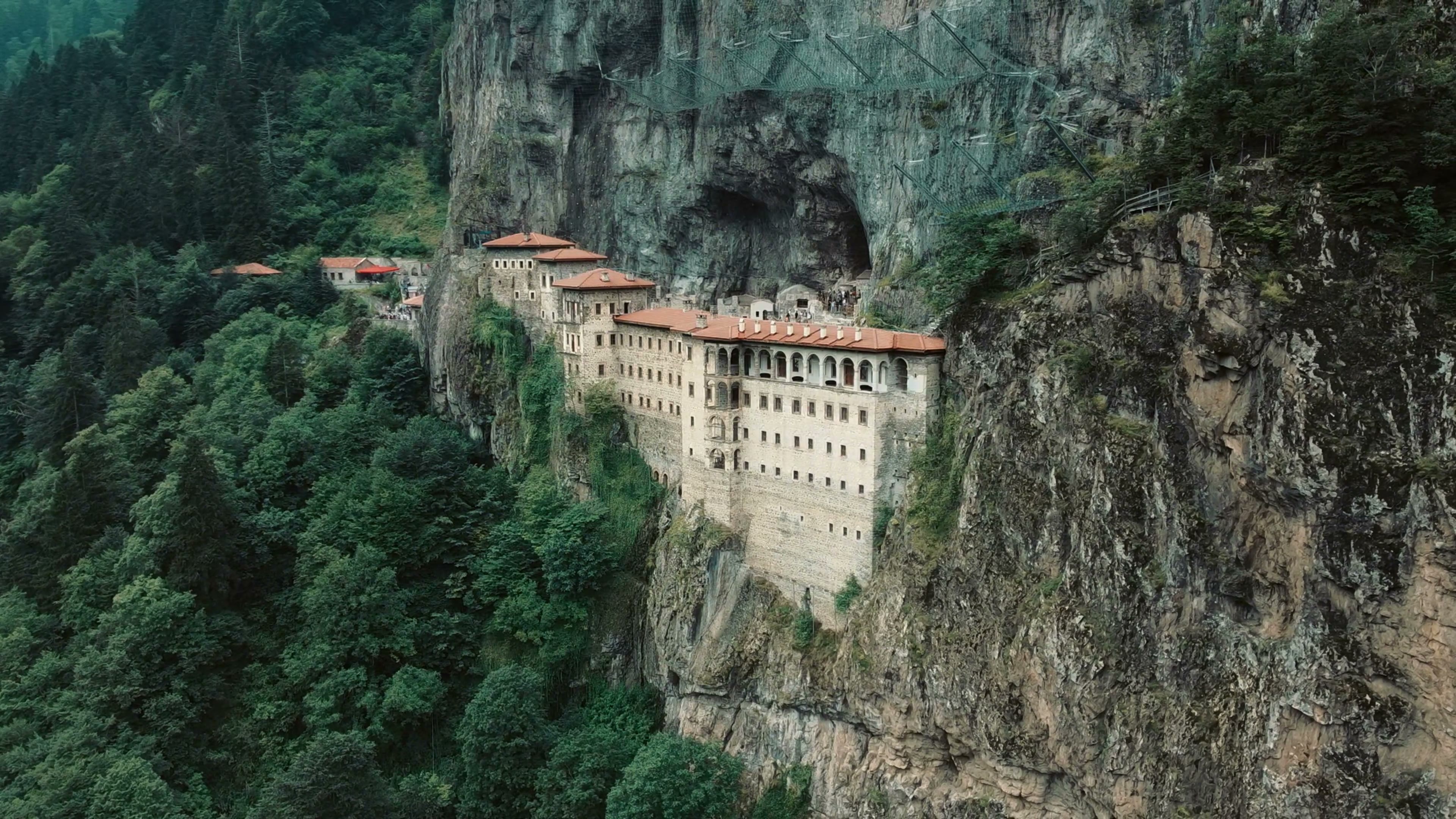
The monastery is not a detached monument against convenient scenery. Türkiye’s Ministry of Culture and Tourism locates it within Altındere Valley National Park, among forests and rock faces near Maçka. As the road leaves the coast, the horizon narrows into a valley. Scenery alone cannot prove why the first monastic community chose the site, but the setting matters. Slope, water, vegetation and weather shape a visit today. Conditions can change quickly; stairs and uneven ground ask for a deliberate pace. Transport arrangements, walking routes and entry procedures may change. Read current official visitor information before setting out, and leave time to understand the valley.
What UNESCO actually says
The UNESCO World Heritage Centre lists Sümela on Türkiye’s Tentative List, distinct from inscription on the World Heritage List. The phrase “UNESCO site” can suggest a recognition that has not occurred. UNESCO describes a monastic complex built into the Altındere cliffs and developed over centuries. The Ministry’s account combines traditions about an early foundation with evidence of later construction, repair and enlargement. It would be misleading to assign every visible wall to a single fourth-century campaign. On site, keep three questions separate: how the foundation story is told, which periods produced the surviving rooms, and what modern conservation has changed. The result is richer than either an exact founding date or an attractive legend alone.
Beyond the famous front wall
The balcony-lined façade is the view most visitors remember. Yet the Ministry describes a broader complex: a rock church, chapels, kitchen, rooms for students and guests, a library and a sacred spring. The building seen from below was part of a religious community, not simply a dramatic wall. Where access is permitted, look at how rooms connect, where water was used and how rock determined construction. Frescoes with biblical scenes and images of Mary and Jesus belong to worship spaces. Their surfaces are fragile, so observe without touching and follow photography restrictions. A chapel may be closed even when the monastery is open. Avoid building an itinerary around an interior that conservation rules may keep out of reach.
Conservation is part of the visit
Sümela’s cliff position is spectacular and difficult to safeguard. The Ministry’s museum page recounts rock clearance, work on the approach route and restoration of painted areas. It also marks the site as partly closed. A reopening does not guarantee access to every room or path. Rockfall precautions, maintenance and staff instructions can change the route. A closed section does not make the journey pointless. The valley view can reveal how the complex meets the rock more clearly than a close-up. Start with its overall mass, then move into open areas as directed. Respect barriers even if another visitor crosses them. They protect the monument and people passing through a steep landscape.
Plan time for the approach
Time at Sümela is not simply time inside the entrance. Visitors need to navigate the valley, reach the permitted approach, walk and pause. The official museum page lists opening and ticket-office hours, but seasonal rules and conservation work can alter arrangements. Check the current page rather than an old itinerary. Choose a visit with weather, travel and group pace in mind. Someone who climbs stairs slowly belongs in the plan, not in a list of delays. Accessibility varies across a cliffside complex; ask about the latest route before travelling if mobility is a concern. Allow a viewpoint stop so the visit does not become a queue followed by a rushed exit.
Where it fits in the CREAOS journey
The CREAOS Eastern Black Sea itinerary names Trabzon Hagia Sophia and Atatürk Mansion on day one, followed by Uzungöl. Its third day moves from Ayder toward Sümela and back to Trabzon. That structure distinguishes the coastal city from the mountain setting. It does not guarantee fixed time inside every building or access to each room. Flight times, weather and conservation rules influence the day. If the monastery is your priority, say so before booking and ask how much unhurried time the route allows. In Trabzon, leave space to walk and rest rather than treating Hagia Sophia as a photo stop. A good itinerary joins places through meaningful questions.
Three questions to take home
The road from Trabzon to Sümela lets us compare scales. In the city, a building has changed use while remaining part of everyday life. In the valley, a monastery has grown over centuries against a rock face. Both require care to remain visitable. On the way home, ask: What was this place used for? Which parts could I see today? How did its surroundings influence its form? Official access information and directions on site are part of answering honestly. The strongest memory may be the view, but lasting understanding comes from connecting coast, valley, architecture and the people who have used and protected these places.