
Reading Bergama in Three Stops: Acropolis, Asclepieion and Red Basilica
Bergama is easier to understand when you stop thinking of it as a single ancient ruin. Its hilltop acropolis, separate healing sanctuary and red-brick monument in the modern town tell different parts of a long story. How did the city use its dramatic terrain? What did healing mean in a sacred setting? How could one building acquire new meanings across centuries? These questions turn a day among famous remains into an exploration of a living landscape.
Bergama is easier to understand when you stop thinking of it as a single ancient ruin. Its hilltop acropolis, separate healing sanctuary and red-brick monument in the modern town tell different parts of a long story. How did the city use its dramatic terrain? What did healing mean in a sacred setting? How could one building acquire new meanings across centuries? These questions turn a day among famous remains into an exploration of a living landscape.
Why the wider landscape matters
UNESCO lists the place as “Pergamon and its Multi-Layered Cultural Landscape.” The name encourages visitors to look beyond the summit. The acropolis rises over the Bakırçay Plain, while other monuments and later neighbourhoods occupy the slopes and lower town. Pergamon served as the capital of the Hellenistic Attalid dynasty and remained important under Roman rule. Byzantine and Ottoman layers also belong to Bergama's story. Expect changes in scale, building material and purpose as you move between the three stops. The streets between them are part of the setting.
Begin the acropolis with a view
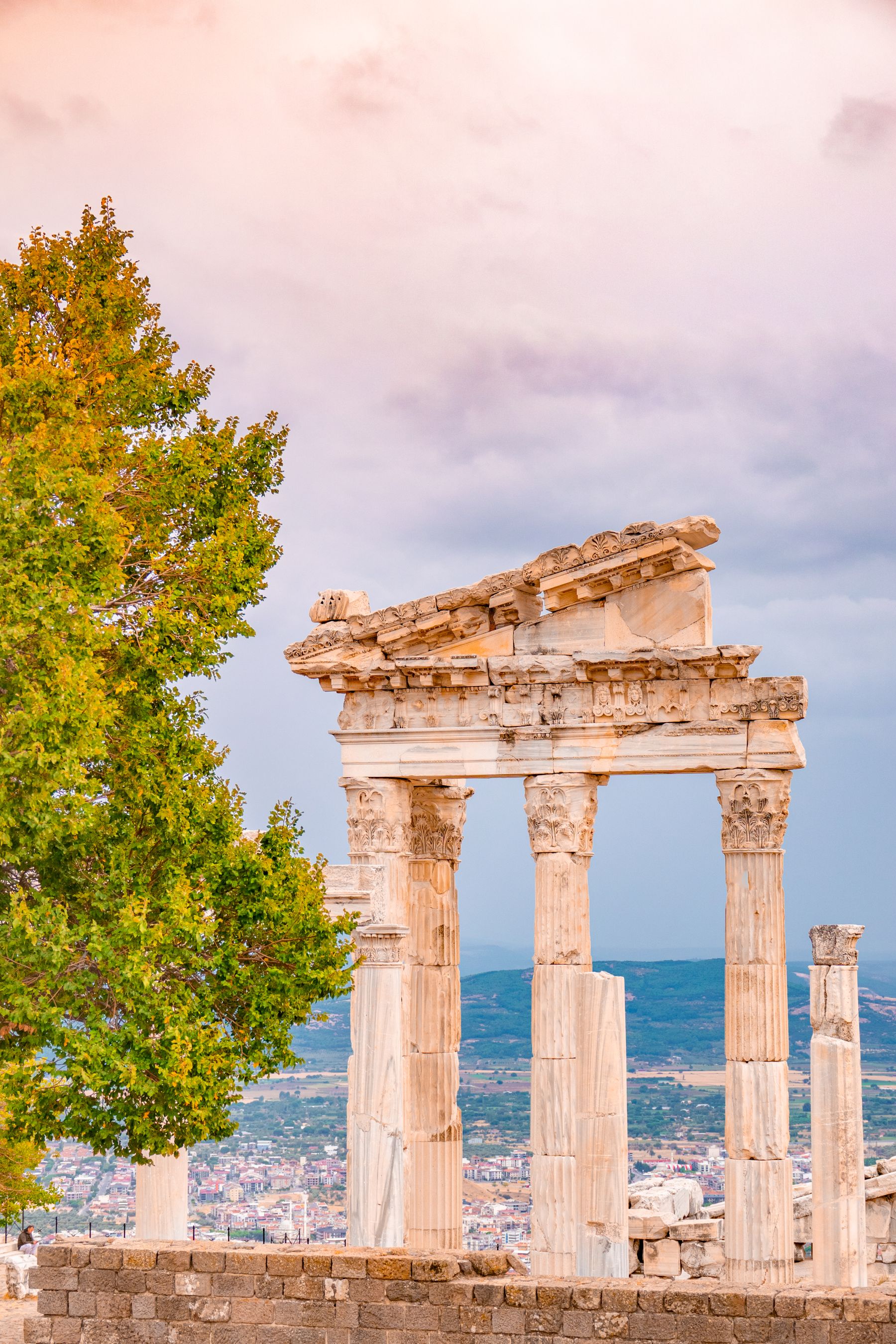
At the acropolis, resist the urge to walk directly to the best-known columns. Take a moment to understand the hill and the plain below. UNESCO describes a city that made steep terrain central to its design, using terraces, walls and monumental buildings. Look at how each level relates to the next. A viewpoint can show why a building occupied a prominent position and how architecture shaped the approach. That wider view gives you a mental map before you read individual remains.
What the steep theatre reveals
The theatre makes Bergama's relationship with topography especially clear. The official Bergama Museum Directorate identifies it as a Hellenistic theatre on the acropolis's western slope. The rows belong to the hillside as much as to a freestanding monument. From above, consider how spectators saw both the performance space and distant landscape. Notice the gradients underfoot and the changing view. Ancient stone surfaces can be uneven, and a careful pace makes observation easier.
Reading the library and sanctuaries
The acropolis also invites questions about knowledge, religion and civic life. UNESCO identifies a library, temples, porticoes and a gymnasium among the ancient city's elements. Their names can sound complete on an itinerary, but visible remains are only part of the evidence. Ask your guide to distinguish what survives from reconstruction or historical interpretation. Look for foundations, changes in level and neighbouring spaces. Imagining a lost building can be valuable if you remain clear about what you can actually see.
Change the question at the Asclepieion
The Asclepieion shifts attention from civic display to health and belief. The Turkish museum authority describes a sanctuary dedicated to Asclepius, with traces of a large court, sacred water sources and rooms associated with sleeping. Calling it a modern hospital's ancient version would obscure its religious setting. Follow the approach into the sanctuary and consider how spaces relate to one another. Architecture shaped the visitor's experience. When you hear a dramatic story about an ancient remedy, ask what evidence supports it.
Galen and the wider healing story
Galen of Pergamon is frequently associated with the site; the official museum account places him among the physicians relevant to its history. His name is a useful entry point, but it should not eclipse the wider community and traditions that made the sanctuary significant. Think about water, rest, ritual and medical practice as related parts of an ancient setting rather than as a simple recipe. The arrangement of the complex invites you to imagine arrival, waiting and shared space. Compare its rhythm with the acropolis above the town. Seeing these two environments in one day makes the diversity of ancient Bergama much easier to grasp.
Encounter the Red Basilica in town
Back in modern Bergama, the Red Basilica offers another change of scale and material. The İzmir provincial culture authority explains its local name through the red brick used in the building. UNESCO identifies the monument with the Roman sanctuary of Serapis and records later religious uses of parts of the complex. This is a place to notice continuity and adaptation without flattening centuries into a tidy sequence. Observe what is still visible, where later fabric meets earlier construction and how the monument stands within today's town. The idea of a multi-layered cultural landscape becomes tangible here: the past is neither isolated on a hill nor confined to one era.
Plan a day that can breathe
The acropolis, Asclepieion and Red Basilica belong to one heritage story, but they are separate visits rather than rooms in a single enclosed site. Account for transfers, entrances and different walking conditions. Check current opening arrangements and ticket details with official sources shortly before travel instead of relying on an older article. Comfortable shoes, water and a plan for exposed or steep stretches will make the day easier. If someone in your group needs a gentler pace, allow generous breaks and discuss access needs in advance. A lunch pause can also be a good moment to compare the three themes you have seen so far.
Make a guided visit more useful
A thoughtful guide does more than attach dates to ruins. At the acropolis, ask about terrain, power and city planning. At the Asclepieion, ask how belief and healing shaped a sanctuary. At the Red Basilica, ask how later communities used an earlier structure. If you are travelling with children or are new to archaeology, choosing one main idea at each stop can keep the day engaging. More experienced visitors may want extra time to discuss evidence, conservation and competing interpretations. CREAOS Travel's Bergama Ancient City Tour connects these three places; confirm the current route, inclusions, entrance arrangements and departure point before booking.
Leave with the connections
Bergama's appeal lies in the connections between its distinct places. The steep theatre frames the plain, the Asclepieion changes the conversation from politics to healing, and the Red Basilica shows how buildings can outlive their first purpose. None needs to provide the single defining image of the day. Slow down enough to describe what you see accurately, and leave room for questions when the evidence is incomplete. If you have one day, give each stop a fair share of attention rather than adding so many sites that their meanings blur. You will leave with a clearer sense of the city that links them.