
Pamukkale and Hierapolis: A Thoughtful Guide to Turkey’s Cotton Castle
Pamukkale looks almost dreamlike from a distance: a white hillside rising above the Denizli plain, with terraces shaped by mineral-rich thermal water. Yet the landscape is only half the story. At the top of the slope, the ancient city of Hierapolis reveals how people have been drawn to these springs for centuries. Together, the terraces and ruins make this o
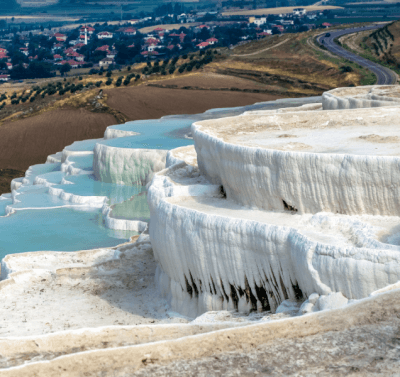
Pamukkale looks almost dreamlike from a distance: a white hillside rising above the Denizli plain, with terraces shaped by mineral-rich thermal water. Yet the landscape is only half the story. At the top of the slope, the ancient city of Hierapolis reveals how people have been drawn to these springs for centuries. Together, the terraces and ruins make this one of Türkiye’s most rewarding places to explore slowly.
What makes Pamukkale special?
The name Pamukkale means “cotton castle,” a fitting description for the brilliant white formations. Water carrying calcium carbonate flows across the hillside and leaves mineral deposits behind, gradually building the travertine terraces. As a result, their appearance changes with the light, so a visit can feel different from morning to late afternoon.
For this reason, it is best to see Pamukkale as a protected landscape rather than an open-air swimming complex. Therefore, follow the marked visitor routes and local instructions: access to particular terraces can change to safeguard the formations. Treat the site as both a natural wonder and a fragile piece of shared heritage.
Walk beyond the white terraces
It is easy to arrive for the famous view and overlook Hierapolis. Instead, give the ancient city its own time. Its theatre, streets, baths and necropolis add a human story to the striking scenery. UNESCO recognises Hierapolis-Pamukkale for the close relationship between this cultural heritage and the thermal landscape.
In addition, a walk through the ruins gives the visit a natural rhythm. For example, pause at viewpoints, notice how the city sits above the plain and imagine why its springs mattered to earlier visitors. If ancient history interests you, allow enough time for both the archaeological area and the travertines rather than treating one as a quick photo stop.
How to plan your visit
Choose a comfortable pace
Pamukkale rewards an unhurried itinerary. Walking distances across the site can add up, and some surfaces are uneven. Comfortable footwear, drinking water and sun protection make the day more enjoyable. Before you go, check official visitor information close to your travel date for current access rules and opening arrangements.
Think about the wider journey
Pamukkale pairs naturally with a broader trip through western Türkiye. Travellers staying on the Aegean coast can explore different ways to connect the region’s ancient cities and landscapes. CREAOS Travel’s Pamukkale tours offer a starting point for choosing an experience that fits your interests and available time.
Make room for curiosity
Of course, photography is part of the pleasure here, but the best memories often come from looking beyond the postcard view. Instead, take time to understand the geology, the city’s long history and the care required to protect the terraces. A knowledgeable guide can help connect these elements into one coherent story.
What to pair with Pamukkale
If you are travelling beyond Denizli, the Aegean region offers many ways to extend the story. Ephesus introduces a very different ancient urban landscape, while coastal towns offer a slower change of pace. The right combination depends on your starting point and how much time you want to spend at each stop. After all, trying to fit every landmark into one day can leave little room for the places themselves.
For visitors who prefer a focused experience, a dedicated Pamukkale day leaves more space for the terraces and Hierapolis. By contrast, travellers with several days can build a wider route through western Türkiye. Browse the Aegean region tours for inspiration, then compare the actual itineraries before choosing.
Travel with respect for the site
The terraces are beautiful because of a natural process that remains active, and that process needs protection. To help, stay within visitor areas, follow guidance at the entrances and avoid leaving anything behind. In Hierapolis, keep to permitted paths and give archaeological details the same care you would in a museum.
Moreover, small choices improve the experience for everyone. For example, carry a refillable water bottle, plan breaks in the shade when possible and leave extra time for the walk back to your transport. If mobility or pace is a concern, discuss it when planning your itinerary so the day can be shaped around what is comfortable for you.
A natural and cultural journey in one place
Ultimately, few destinations bring landscape and history together as vividly as Pamukkale and Hierapolis. First, the white terraces draw you in; the ancient city invites you to stay and look closer. Whether this is a dedicated day trip or one chapter of a longer Türkiye itinerary, leave space to experience both sides of the site.
Planning a journey around your own pace and priorities? Explore CREAOS Travel’s tailor-made tours or contact the team to discuss a route that works for you.
Heritage background: UNESCO World Heritage Centre — Hierapolis-Pamukkale.