
Dolmabahçe and Ortaköy: Two Ways to See the Bosphorus
Compare the formal waterfront of Dolmabahçe Palace with the living square and shoreline of Ortaköy on a thoughtful Istanbul day.
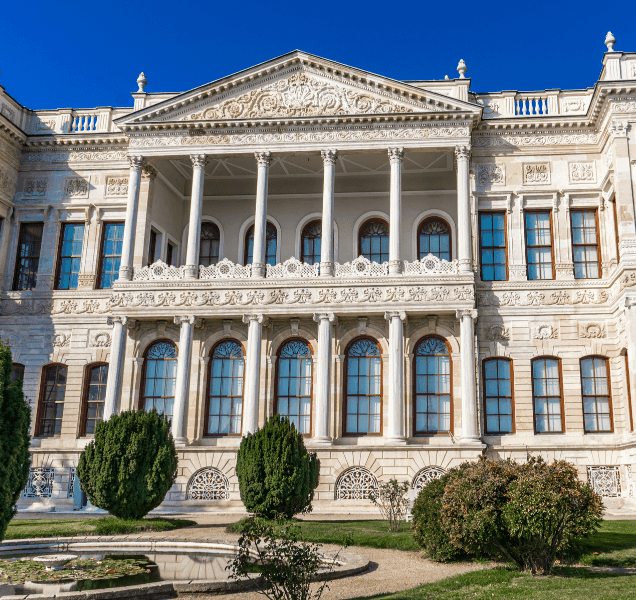
One shoreline, two different experiences
Dolmabahçe and Ortaköy sit along the European shore of the Bosphorus, yet they offer very different ways of experiencing Istanbul. A palace arranges space around administration, ceremony and private residence. A neighbourhood square brings worship, trade, visitors and everyday movement together. Seeing both in one day creates a useful question: who has used this waterfront, and for what purpose? That question is more interesting than collecting two similar photographs of the strait. Give each place its own pace, and notice how the water changes meaning when viewed from a formal garden and from a public square.
The shoreline before the palace
According to the National Palaces Administration, the cove at Dolmabahçe once held naval vessels and hosted maritime ceremonies. From the seventeenth century onward, it was filled and became an imperial garden. The name Dolmabahçe preserves that transformation. The palace therefore did not simply appear beside an untouched natural shore. Its site had already been shaped by human decisions about the water’s edge. Before entering, look at a map and consider the length of the waterfront. Even a seemingly straight boundary tells part of the story of landmaking, gardens and an institution that wanted to face the Bosphorus.
A palace with more than one purpose
National Palaces records that Dolmabahçe Palace opened in 1856. It was built during Sultan Abdülmecid’s reign, but calling it only a splendid home misses its structure. The administration distinguishes the Mabeyn-i Hümâyûn, or Selamlık, where affairs of state were conducted; the Harem-i Hümâyûn, associated with the family’s private life; and the Muayede Hall, reserved for major ceremonies. Keep these functions in mind as you move through the visitor route. A room’s size and decoration make more sense when you know whether it served official work, domestic life or representation before high-ranking guests.
Remember the Republican chapter
Dolmabahçe is not solely an Ottoman story. The National Palaces Administration says Mustafa Kemal Atatürk used the palace for work during periods between 1927 and 1938 and died there. This chapter gives the visit emotional weight, but it should not erase the building’s earlier functions. The state rooms, family quarters and later working spaces belong to different moments of the same place. Ask a guide to set them out in sequence. Respect for a memorial space can coexist with curiosity about the palace’s longer history. It is precisely that layering that makes Dolmabahçe more than an impressive interior.
Change pace on the way to Ortaköy
Treat the move from Dolmabahçe to Ortaköy as part of the route, not a gap between attractions. Watch how access to the waterfront, pavement space and traffic change. The two points may look close on a map, but congestion, weather and the group’s walking needs affect the journey. At Ortaköy, the open square and shoreline have a different rhythm from the controlled route through the palace. Pause before deciding what to see first. A few minutes of orientation will help you understand where people gather, how the mosque meets the square and how the Bosphorus remains in view.
The mosque is a living place
Istanbul’s provincial culture and tourism authority identifies Büyük Mecidiye Mosque, commonly called Ortaköy Mosque, as a leading symbol of the neighbourhood. Its waterfront position makes it a familiar photographic subject. It is also a place of worship, and exterior visibility does not imply unrestricted access to the interior. Follow current local guidance on prayer times, visitor areas, clothing and photography. Rather than composing only a mosque-and-bridge image, consider how the building relates to the public square and the water. Its role in the neighbourhood is richer than its status as a postcard landmark.
Compare the two Bosphorus views
At Dolmabahçe, the strait is framed by a palace, garden and ceremonial order. At Ortaköy, it shares the scene with a mosque, square and public shore. Ask the same three questions in both places: who sees the water, who can reach the edge, and what was the surrounding space designed to do? There is no need to force both answers into a single period of history. Palace and neighbourhood developed on different scales for different purposes. A pair of photographs can make the contrast visible: one showing architecture and garden, the other showing the relationship of square and shore.
Plan for actual conditions
Check the current National Palaces visitor page for Dolmabahçe’s opening arrangements, ticket categories and available sections shortly before travelling. At Ortaköy Mosque, respect prayer and any notices on site. Leave flexibility between the two stops; a palace visit, traffic and a crowded waterfront may all take longer than expected. If access needs affect your group, confirm details directly with the relevant operators rather than relying on an old itinerary. Wind or rain can change the experience on an exposed shore. A good plan leaves enough space for each place to reveal its character.
Shape the CREAOS journey carefully
CREAOS offers a “Dolmabahce – Ortakoy Tour” linking these two settings. Before booking, confirm which palace sections the itinerary covers, whether admission is included, how mosque access will be approached around prayer, and what transport is planned. Descriptive language in a tour listing is not a substitute for a feasible route. If architectural history is your focus, give more time to the palace. If you want to understand public life on the Bosphorus, do not rush Ortaköy. A private journey has value when its timing reflects those choices rather than simply adding more stops.
What the day should leave behind
You need not decide which view is prettier. Dolmabahçe encourages questions about the waterfront as a setting for government and ceremony; Ortaköy shows it alongside worship and everyday public life. Use National Palaces and the provincial culture authority for documented history, then use each operator’s latest guidance for practical access. Photographs may fade into a collection of similar blue-water scenes. An explanation of why these two places felt different will stay with you longer. The Bosphorus is not merely their backdrop. It is the shared geography that gives each setting a distinct meaning.