
Istanbul’s Hans and Hammams: A Walk Through Commerce and Everyday Life
Read the Grand Bazaar, Büyük Valide Han and historic baths as connected parts of Istanbul’s commercial and social history.
Why read the city through hans and hammams?
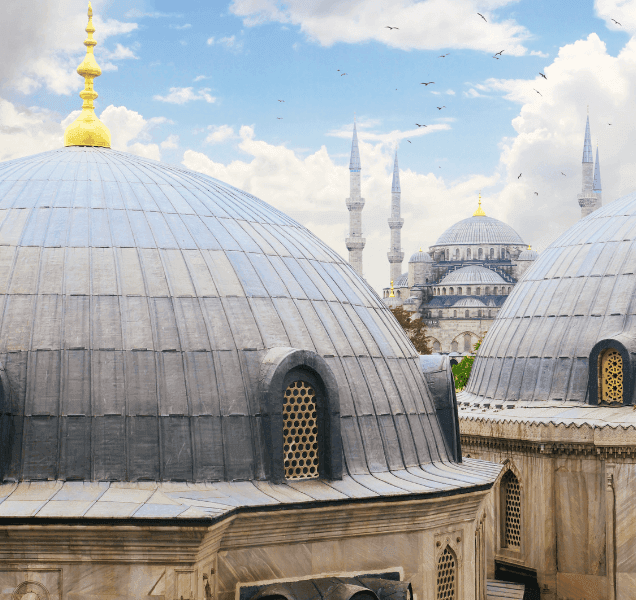
The Historic Peninsula is often introduced through palaces and monumental mosques. Yet Istanbul also developed through the places where goods were stored, work was done and people met. A han was part of the commercial infrastructure: its rooms, passages and courtyard connected merchants, craftspeople and streets. A hammam gave urban life a different rhythm, bringing together architecture, water, bathing and social contact. Considering these two kinds of building together shifts attention from a sequence of famous facades to the workings of a city. The aim is not to collect the greatest number of stops. It is to notice how commerce and daily life occupied neighboring streets.
The Grand Bazaar is a layered place
According to the Istanbul Provincial Directorate of Culture and Tourism, construction of the Grand Bazaar began in the reign of Mehmed the Conqueror, and the complex expanded over subsequent centuries. It should therefore not be imagined as a single building fixed at one moment in time. Bedestens, covered passages and the streets around them developed with changing commercial needs. Walk slowly enough to see the rhythm of the vaults, the entrances leading into adjoining streets and the contrast between old fabric and current retail. The bazaar is a living place, not an empty historical set.
Beyond the bazaar gates
Moving toward Mercan and Mahmutpaşa changes the scale of the visit. Showrooms may give way to workshops, storage, wholesale trade and busy delivery routes. This transition matters because the bazaar did not function in isolation. Its neighboring hans formed a wider commercial network, linking movement through the streets to work inside buildings. Look at how a han doorway draws you off the street and how a courtyard might organize access to upper rooms. A respectful visit makes room for the people working there rather than treating their workplace as a backdrop for photographs.
Looking carefully at Büyük Valide Han
Fatih Municipality’s historical material associates Büyük Valide Han with Kösem Sultan and places it within the seventeenth-century landscape of Istanbul’s hans. The significance of the building is larger than a view from above. Its courtyard arrangement, entrances and position among trading streets tell a story about movement and exchange. The municipality also describes conservation work on historic hans, a reminder that these structures remain vulnerable and require stewardship. Do not assume that roofs or closed sections are open to visitors. Access arrangements can change, especially where repair or active business is involved. Let the day’s rules and the directions of people responsible for the building shape your route.
What does a hammam building tell us?
A historic bath is more than a marble room. Its spaces support different stages of arrival, changing, warming, bathing and rest. Domes, light openings, stone surfaces and the movement of water are parts of its architectural logic. There is no single plan shared by every hammam, and present-day services vary just as much. Before entering, check the establishment’s current rules about photography, visiting and bathing. Even viewing a bath from outside can be useful: its placement on the street and relationship to nearby shops or religious buildings offer context that an isolated interior photograph cannot provide. A guide can help distinguish documented history from modern presentation.
Cağaloğlu: history and contemporary service
Cağaloğlu Hammam is associated with eighteenth-century Istanbul; an official regional tourism plan dates its construction to 1741 in the reign of Mahmud I. A historic building offering a service today does not mean that every part of that service is an unchanged old ritual. Treat the architecture and the current visitor experience as related but separate subjects. If you are considering a bath session, confirm the package, duration, price, privacy arrangements and any health considerations directly with the operator. If your interest is mainly cultural, the building’s position among nearby streets can still enrich a walk. Neither a booking nor a particular level of access should be assumed from the building’s age.
Walking toward Süleymaniye
UNESCO identifies Süleymaniye and its associated area as one component of the Historic Areas of Istanbul. This makes it helpful to think beyond a single viewpoint or a single monument. Streets, smaller buildings and the shape of the neighborhood all belong to the setting. As the route climbs, notice the relationship between local trade, the mosque complex and the direction of the Golden Horn. Süleymaniye Hammam belongs in this wider urban picture, although its visiting and service conditions should always be checked separately. Keep worship spaces quiet and follow appropriate dress guidance. The neighborhood remains a place of daily life, not simply a viewing platform for travelers.
Build a route that leaves room to observe
A good day on this theme need not rush through every named building. One approach starts near the Grand Bazaar, continues into the han streets and then chooses either the Cağaloğlu or Süleymaniye direction according to interest. This is an editorial route suggestion, not a promise about admission, transport or services. Uneven paving, slopes and crowded passages can change walking pace. Accessibility also differs by building. Checking official notices and individual operators before departure is more useful than relying on an old itinerary. Leave time to pause between stops: connections between buildings are often clearer on the street than on a checklist.
Questions that make the walk richer
Compare the threshold between a han door and its courtyard with the open flow of the bazaar and the more private sequence of a hammam. Each organizes the boundary between public and private life differently. Alongside dates, ask who uses a building now and what has been changed to keep it functioning. Photograph with care: avoid capturing workers and bath guests without consent, do not block narrow routes, and respect worship. A short walk guided by these questions can reveal more about Istanbul’s social and economic history than a much longer race between landmarks.
Place the walk in a wider Istanbul journey
Hans and hammams add a human scale to an itinerary that might otherwise focus only on imperial monuments. The Historic Peninsula also belongs to craftspeople, traders, residents and visitors whose routines shape its streets. You do not need to enter every historic doorway to understand the area. Recognizing how several buildings connect can be a more lasting result. Explore the CREAOS Istanbul Hans and Hammams tour as one possible route, and compare it with the Istanbul destination guide for other neighborhoods. Confirm the actual tour program and access with the team before booking. This guide offers a way of looking, not a guaranteed schedule or a claim that every site is open.