
Konya Between Two Courtyards: Mevlâna and the Karatay Museum
A walking guide to central Konya through the former Mevlevi lodge and a Seljuk school whose tile collection tells a different story of the city.
Give Konya a purpose of its own
Konya often appears on an Anatolian itinerary between the travertines of Pamukkale and the rock valleys of Cappadocia. The temptation is to make one quick visit and count the city as seen. A more memorable introduction pairs the Mevlâna Museum with the Karatay Tile Museum and leaves room to walk in between. Both places reward close observation, but the questions they raise differ. At the former lodge you can consider how a community gathered around a teacher and how that memory is presented today. At Karatay you can look at the architecture of a place of learning and at tiles brought together in a museum collection. The distance between those experiences is the point of the route.
Start at the former Mevlevi lodge
Many visitors recognize the silhouette of the Mevlâna Museum before they know what the complex contains. The Turkish museum service identifies the site as the former Mevlevi lodge and connects its setting with a garden associated with the Seljuk palace. Use that account as an introduction, then let the rooms and their labels tell you what each space did. Before focusing on a single monument or object, notice how you enter, where the courtyard opens, and how movement slows near the burial spaces. Three details remembered clearly can do more for your understanding than a set of hurried photographs. Allow other visitors to pass and follow the latest instructions about dress, photography and access.
Read a room before reading every label
A museum housed in a former lodge sets a small puzzle for the visitor. An object may be displayed where it was used, or it may have been moved to a room chosen for the exhibition. Look for dates, materials and wording that identify what you are seeing. Ask your guide to distinguish the original function of a room from its current use. The same habit helps with conversations about Mevlâna: a poet's life, the history of the community that developed around his teachings, and the way visitors remember him today are different strands of the story. A few minutes to look at one room carefully make those strands easier to follow.
Walk through the city between visits
On the way toward the Karatay Museum, take a short break before beginning a second set of exhibits. A street junction or a square can be a useful place to check directions, compare the scale of the buildings and decide whether to stay outdoors a little longer. Alaeddin Hill makes a helpful reference point when looking at a map of the centre. The material Türkiye submitted to UNESCO for Konya's Tentative List identifies the Alaeddin Mosque among the city's Seljuk buildings. The entry is a proposal on the Tentative List. If you add a mosque visit, check worship times and local access instructions and be ready to spend that part of the walk outside.
Look up before looking into the cases
The Karatay building was commissioned by Celaleddin Karatay in the thirteenth century, and the museum service dates it to 1251. It opened as a tile museum in 1955. Take a moment to notice the framing of the entrance and the change in scale as you step into the building. Inside, find a spot where you can see how the walls meet the upper part of the central space. Depending on the light, the decoration may reveal details as your eyes adjust. The case labels can wait for a moment. The building gives you a reference for how colour and surface worked at architectural scale, which helps when you turn to the individual pieces.
Follow the labels from building to palace
Among the works described by the museum service are tiles from the Kubad-Abad palace complex near Beyşehir. The place where those pieces were made or used matters as much as their designs. Compare an element still attached to the building with one in a display case. Ask what can be inferred from its shape, what the label says about its original setting, and where its context is uncertain. If you are travelling with children, give them an attainable task: choose two shapes or animals and compare the way they are drawn. For adults with an interest in craft, a single tile can open a conversation about repetition, glazing and the way a pattern changes when it is seen in fragments.
Pick an order that suits the group
The lodge first and Karatay second is a useful order if Mevlâna is the main reason for your visit. Reverse it if your group wants to see the architectural decoration while everyone is fresh. A break between museums gives you a chance to check how people are coping with standing, thresholds, queues or an unfamiliar setting. Confirm step-free access directly for the parts of each site you wish to see. If the city is a stop on a driving day, choose one main visit and treat the second as a possibility until the timing is agreed. For a dedicated Konya stay, the pair works as an introduction that leaves energy for another neighbourhood or museum later.
Fit the city into a wider journey
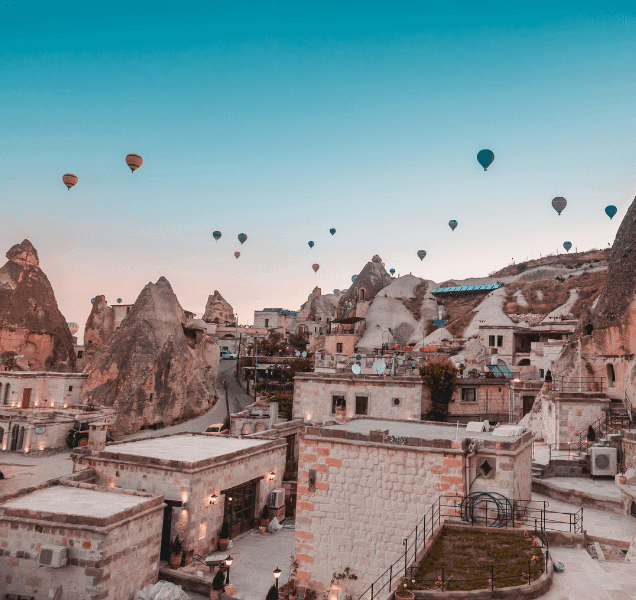
The CREAOS Central Anatolia itinerary lists Konya and a visit to the Mevlâna Museum. If Karatay is important to you, ask for it by name when settling the written itinerary and allow time to walk or pause between the two places. The tour photograph shows Cappadocia, another stage of that route. In Konya, give yourself one thing to look for in each building: perhaps how visitors move through the lodge and how tilework changes a room at Karatay. Those observations give the city a place of its own in the trip. Return to the museum descriptions before departure to check practical details, especially when a tight onward journey depends on them.