
Midyat Beyond the Postcard: Stone Streets and Mor Gabriel
Read Midyat through its living stone streets, silver workshops and Syriac heritage, then plan a respectful visit to Mor Gabriel Monastery.
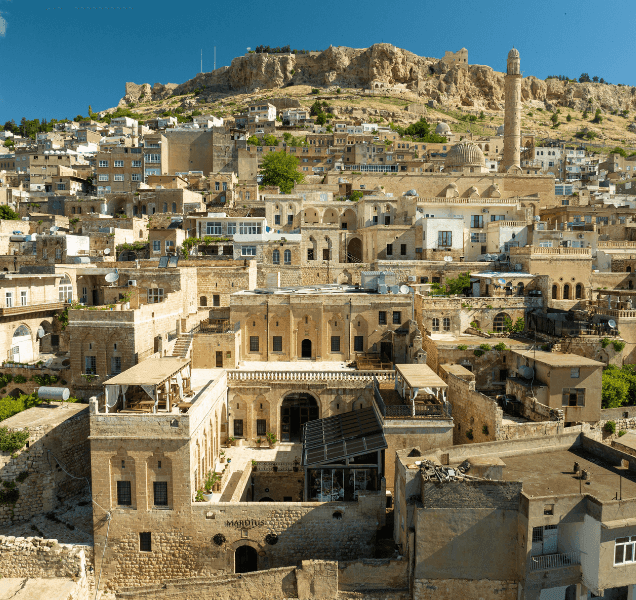
Begin with a place, not a checklist
Midyat is often introduced through a single view of pale stone houses. That image is attractive, but a useful visit asks what happens between the buildings. The old streets still carry ordinary neighbourhood life, workshops and places of worship. Start slowly and look at how doors, courtyards, windows and passages respond to the terrain. This is a more specific perspective than a broad Mardin and Midyat overview: the goal is to understand the built landscape and the community that uses it, rather than to collect the maximum number of photo stops. Ask before photographing anyone at work or entering a doorway that appears open.
Walk between Midyat and Estel
The Mardin Provincial Directorate of Culture and Tourism describes historic streets around the Upper Quarter and the route toward Estel Köşk Square. It also identifies another cluster around the guest house and silversmiths’ bazaar. These descriptions are useful for orientation, but they do not promise one continuous pedestrian route with a fixed walking time. Choose a manageable section, then allow room for pauses. Stone façades can look similar in a photograph; the way a lane narrows, opens into a square or passes a workshop gives it context. Wear comfortable shoes and ask locally about current access before entering narrow or uneven streets.
Look closely at the stone
Midyat’s architecture deserves more attention than the phrase “stone houses” usually gives it. At street level, compare the treatment of a threshold with the decorative work above a window. Notice which surfaces are rough and which have been shaped to catch light. A visible façade is only part of a lived house, so avoid inventing stories about rooms you cannot see. The provincial tourism office associates the historic quarter with local katori stone; a guide can explain how this material and skilled labour contribute to the streetscape. Some buildings have changed use over time, and their current function matters as much as a presumed original one.
Meet the craft without treating it as a show
The Ministry of Culture and Tourism lists filigree silverwork, stone carving, copper work and weaving among Midyat’s continuing crafts. In a silver workshop, ask how an item was made, whether the work was done locally and what material is used. Buying a piece is optional; understanding its maker is the more interesting part of a visit. Do not assume every object in a bazaar is handmade in the same workshop. A courteous conversation may reveal how fine wire is shaped and joined, but a busy craftsperson may have little time for an extended demonstration. Let the workshop set its own pace.
Give Mor Gabriel its own context
Mor Gabriel, also called Deyrulumur, stands outside Midyat rather than within the town’s historic lanes. The provincial directorate places it southeast of the district and describes it as an active centre of Syriac Orthodox life. The site’s history is connected with founders Mor Şmuel and Mor Şemun and an early community traditionally dated to the late fourth century. UNESCO’s tentative-list description distinguishes the claimed foundation date from the surviving buildings, many of which are later. This distinction matters: a foundation story is not a date stamp on every wall. The monastery is a religious place first and a visitor destination second.
Read the tentative-list status accurately
UNESCO includes the churches and monasteries of Midyat and the surrounding Tur ʿAbdin area on Türkiye’s tentative list. A tentative listing is a proposal for possible future inscription, not World Heritage inscription. It covers a wider landscape, not just Mor Gabriel. This broader view helps explain why one monastery visit cannot stand for all Syriac architectural history in the region. If this heritage is your main interest, discuss additional places with a qualified guide and verify which are open to visitors on your dates. Avoid presenting active worship communities as remnants of a vanished culture.
Plan a respectful visit
A monastery can have religious holidays, services, guided-visit arrangements and areas closed to visitors. The provincial pages themselves display differing historic price and time details, so do not rely on a copied schedule or fee. Check current arrangements directly with the site or through your travel organiser before departure. Dress for a place of worship, follow any photography instructions and speak quietly where requested. If a guided visit is offered, listen to the explanation rather than rushing to the next viewpoint. Allow flexibility in the rest of the day; the journey between town and monastery is part of the planning.
Build an honest Mardin and Midyat route
The CREAOS Mardin–Midyat tour connects these places in a wider itinerary. Read its present route and written inclusion list before assuming that every stop, meal, entrance or overnight arrangement is included. For a private plan, tell the team whether stone architecture, Syriac heritage or craft workshops are your priority. Someone interested primarily in Mor Gabriel may prefer to protect more time there than in a crowded shopping schedule. If accessibility is important, describe your walking needs before the route is finalised. The most useful itinerary has enough space to notice details and respond to actual site access.
Keep the next question open
After Midyat, you might return to Mardin’s hillside streets with a sharper eye for stonework, or follow a different thread into the region’s religious and craft history. Compare the CREAOS Eastern Türkiye destination page with the Mardin–Midyat tour to see how this focused day fits a longer journey. Neither page should replace direct confirmation of transport, entries and timing for your travel date. A good visit does not claim to explain every community in one afternoon. It leaves you with a more precise understanding of what you saw, who cares for it today and which questions deserve a second visit.