
Uçhisar Castle and Pigeon Valley: Above and Below Cappadocia
A practical Cappadocia guide to Uçhisar Castle, Pigeon Valley’s rock-cut dovecotes and choosing between a viewpoint and a walk toward Göreme.
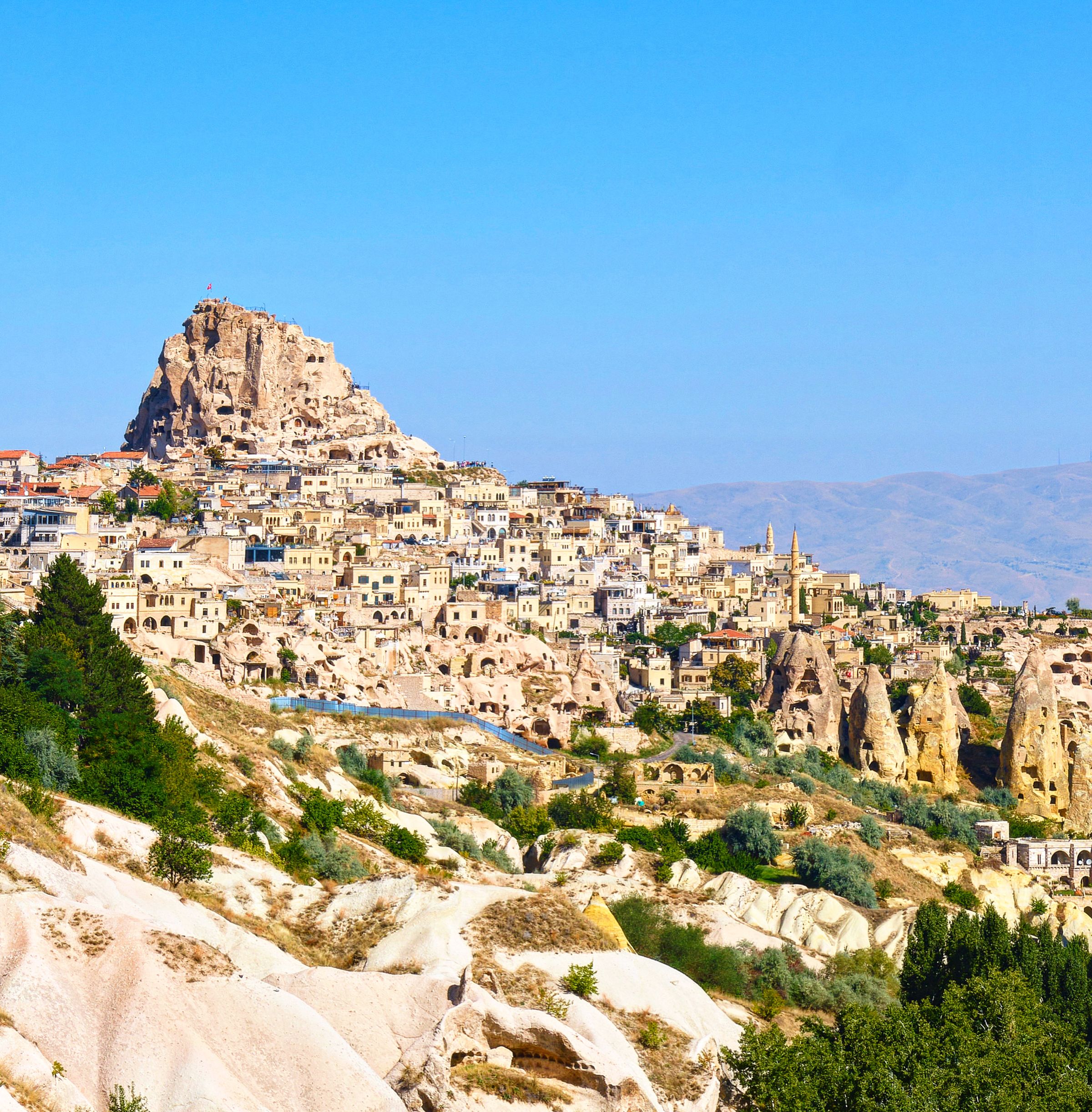
The rock above Uçhisar is easy to recognise from a distance, but its detail only makes sense when you look at it from more than one level. From the town you can see openings cut into the rock and houses gathered at its foot. From the valley side you begin to notice the shallow ridges and folds that connect the settlement to Göreme. There is a simple way to organise a visit: look at the site from below, decide whether a climb suits your group, then spend some time looking into the valley. Even a short visit can explain why the castle stands here and why there are small, carefully fashioned openings in the cliffs nearby.
Start with the rock and the town
Uçhisar Castle is formed around a natural mass of rock. The Culture Portal of the Turkish Ministry of Culture and Tourism describes two adjoining masses and records features such as carved cisterns. Rather than arriving with the image of a freestanding castle in mind, look for places where the natural contours of the rock govern the shape of a chamber, an opening or a route through the complex. That interaction is easier to see from a public street or an approved viewpoint than while you are concentrating on your footing on a stair. Take a few minutes to observe the whole profile before deciding where to go next.
The local heritage inventory describes long use of the site and proposes a possible early defensive origin. That interpretation is worth treating as a possibility rather than a date you can assign to every visible opening. A window, cavity and later masonry edge can represent different uses even when they sit next to each other. Keep a separate mental map of what is visible and what a historical source can explain. A short visit becomes more rewarding when you learn to distinguish the two. If you are travelling with a guide, ask them to choose one area of rock and point out the details they can interpret with confidence.
Read Pigeon Valley from the rim
The Nevşehir Provincial Directorate of Culture and Tourism describes Güvercinlik Vadisi, or Pigeon Valley, as extending from Uçhisar toward Göreme and named for its rock-cut pigeon houses. Pause at an established viewpoint and scan one wall slowly. Small entrances, often high on a face, can be difficult to see until your eyes adjust to the scale of the cliff. Use binoculars or zoom if you have them and keep back from edges. The view is useful even if nobody in your group plans to venture onto a trail.
The Ministry of Agriculture and Forestry documents the local use of manure collected from dovecotes to fertilise crops. That connection changes what you see in the valley. Openings above a slope can tell you about agricultural work as well as the ability to cut into soft rock. Look from those openings to the lower ground, then ask where cultivation would have made sense. The result is a better picture of Cappadocia as a place people worked and lived in. UNESCO describes the wider Göreme landscape in terms of erosion and long human modification, a useful regional context for that relationship.
Choose a viewpoint or a longer walk
A viewpoint stop, a there-and-back walk and an onward walk to Göreme require different planning. For a short visit, keep the outline simple: spend time near the castle and pick one place on the valley rim where everyone can see the rock faces. For a there-and-back walk, decide where you will turn around before you start and leave time to climb back out. If you intend to finish in Göreme, settle in advance how you will get back to your accommodation or meet your driver. A map showing two nearby towns does not tell you how comfortable a particular path will be for your party.
Ask locally about current route conditions, recent weather and your intended exit. Wind can affect a stop near the rim, and wet or muddy ground can alter the pace of a walk. Choose shoes with grip and take water. Do not follow a faint side track into an opening or cross a barrier for a photograph. If a group includes children, someone with a walking limit or a traveller wary of exposed steps, compare a public viewing spot with the start of the valley route before making a decision. A good visit is one everyone can enjoy at the same pace.
Give the two viewpoints different jobs
For photographs, start with one frame that shows where the settlement meets the rock. Then pick a valley wall and make a second frame that shows the scale of its carved openings. You will come away with a more useful record than if you make the same castle photograph from each stop. Compare the light before choosing a time: angled light can help the small openings stand out, while a hazy panorama may still be worthwhile for reading the shape of a nearby slope.
The published itinerary for CREAOS Travel’s two-day Bible and Cappadocia tour lists Uçhisar Castle and a walk in Pigeon Valley. Ask which section and which castle access arrangements apply to your own trip. The wider Cappadocia tour collection also helps you compare a day focused on churches with one that gives more space to the landscape. Whichever route you choose, finish by looking back toward Uçhisar from a public place. When you can connect the castle, the town and the valley in that final view, the two stops will feel like parts of the same visit.